Before it became El Bonita Motel, the property had lived through many eras of St. Helena history.
In the 1850s, the land belonged to Dr. George Belden Crane’s agricultural property. By the 1920s, it had become the St. Helena Auto Park and campground, where travelers and church groups stayed in tents and cabins before the modern motel took shape.
Located at 195 Main St. (Highway 29/128), the motel has changed many times over the years, but it still holds onto its roadside identity. Its sign faces Main Street, the rooms face the parking lot, and travelers can still pull in from the road and step straight into their rooms.
Mariam Hansen of the St. Helena Historical Society describes El Bonita as “the last one of this era of the roadside motel.”
From Main Street, the sign is the first thing visitors notice.
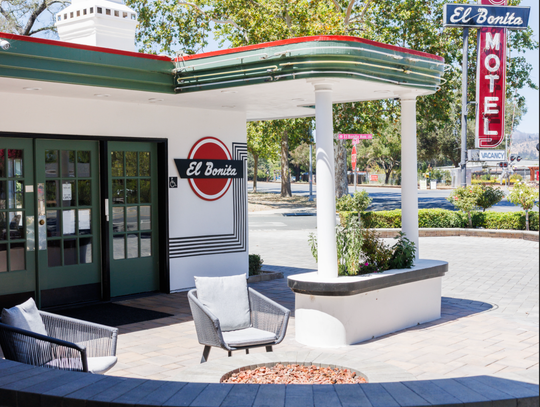
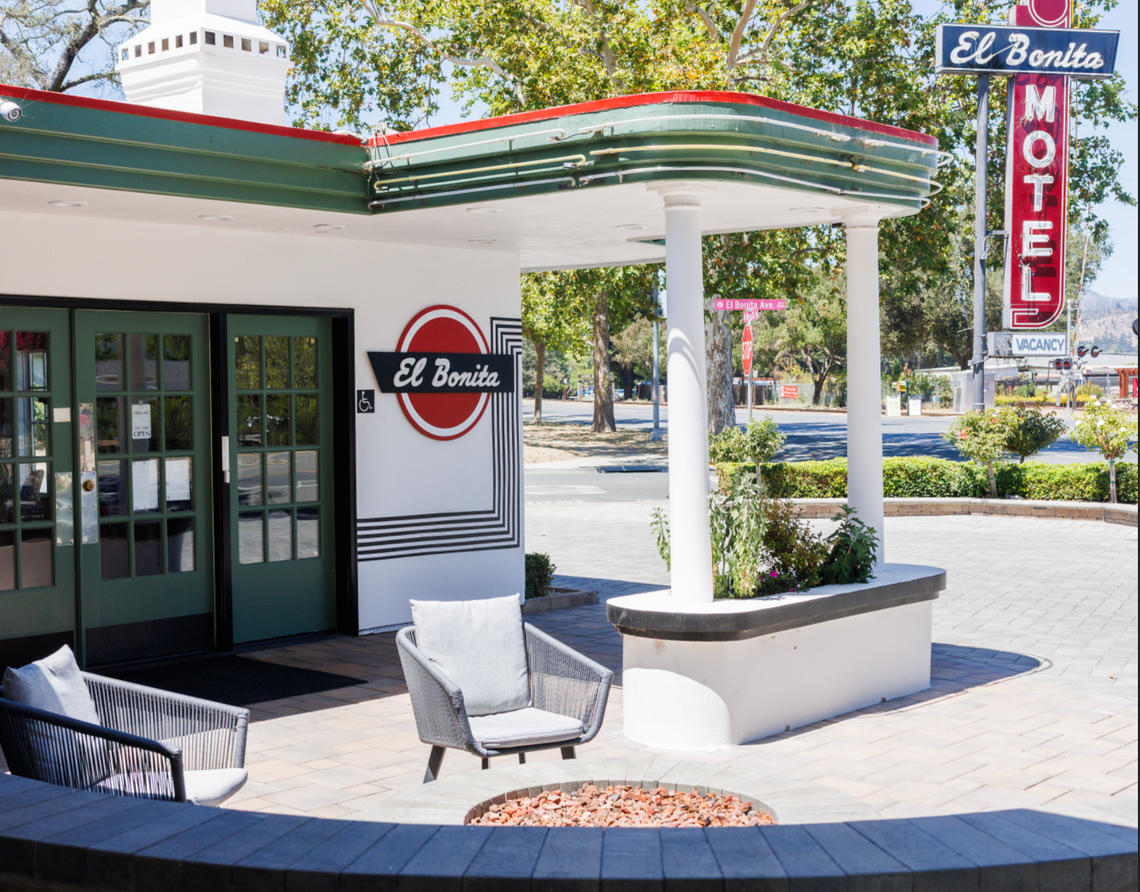
El Bonita’s red, green and white neon sign stands tall enough to be read from a passing car. The letters “MOTEL” are stacked vertically. Below, a small vacancy panel still speaks to an older travel era.
Mitchell Warren knows that sign well.
Warren, the manager and part of the family ownership behind El Bonia, said guests often notice the name first. They’ve asked him the same question for years: “Shouldn’t it be ‘La Bonita?’”
“There’s actually a reason for it,” Warren said. According to Hansen, the motel’s name came from Elmer and Bonita Lawson, the original names behind the business. “So they called it El Bonita.”
The sign isn’t just decoration. It’s the motel’s identity.
Warren said the sign is original to the 1950s, though pieces have been repaired and replaced over time. Neon is not easy to maintain. The sign breaks and it takes work to repair.
But removing it is not an option.
“My dad says he’d rather die than remove that sign,” Warren joked during a recent tour of the property.
As Warren walked around El Bonita, one might notice how much the sign shapes the property. Red room numbers, green roof trim and white stucco all call back to it, especially near the front office, where the rounded roof corners and white columns give the entrance its clearest midcentury feel.
“The sign is our mascot practically at this point,” Warren said.
From the lobby, the property opened into a motor court.
The front building sits low along the road in an L shape. The units repeat in a rhythm: green door, red room number, white framed window, flower box. Then again, one after another along the façade.
The driveway has been upgraded from asphalt to cobblestone and the parking stalls are marked by subtle pavement markers. But even with the modern upgrades, it still feels like an old roadside motel.
Pull in. Park close. Step into your room.
“Originally, this was just like a motel off Highway 29,” Warren said. “There was no pool. There was no nothing. It was just this original L-shaped building.”
That front space is where El Bonita houses amenities most modern hotels have.
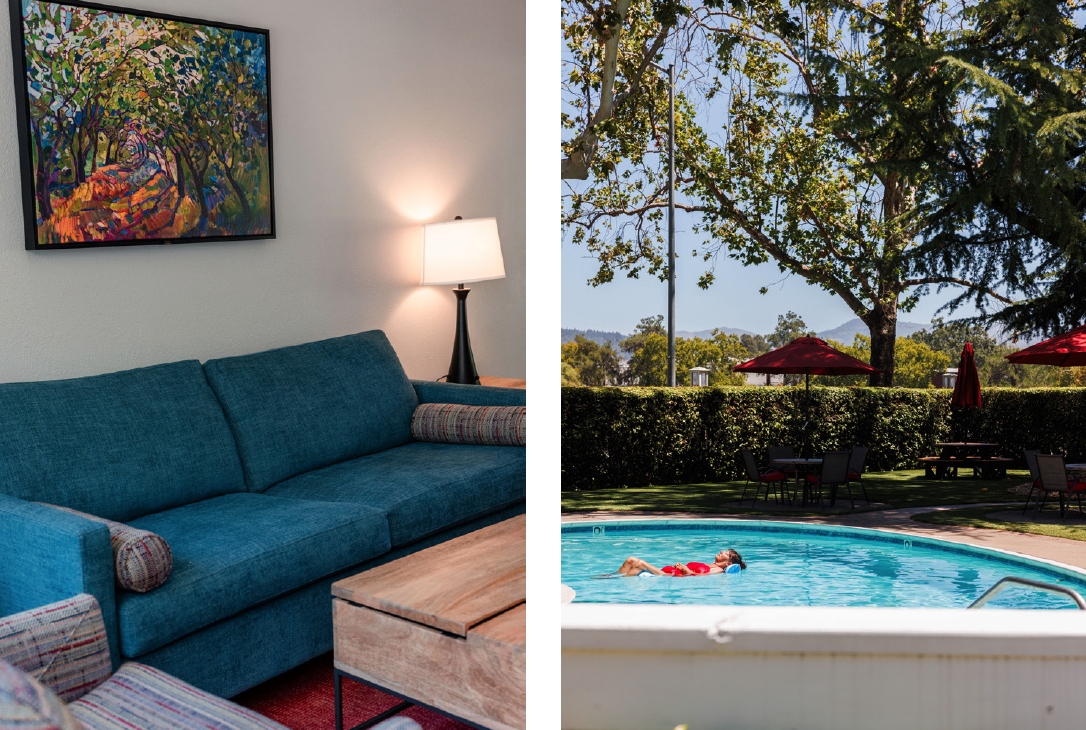
Inside the L shape, the property now opens toward the pool, sauna and courtyard area. Warren said that space used to be grass. Today, shaded seating, a fire pit and sunbathing areas make it feel more like a place to linger than pass through.
In the courtyard of the king suite, the tour group stopped at a weathered Johnson wringer washer, its copper tub turned orange-brown. Warren pointed it out a possibly the oldest object on the property, though its connection to earlier eras remains unclear.
Hansen was careful not to overstate what remains from those earlier periods. Asked if anything from the auto park or campground was still standing, she said, “No, no, I don’t think you would.”
The property today is larger and renovated.
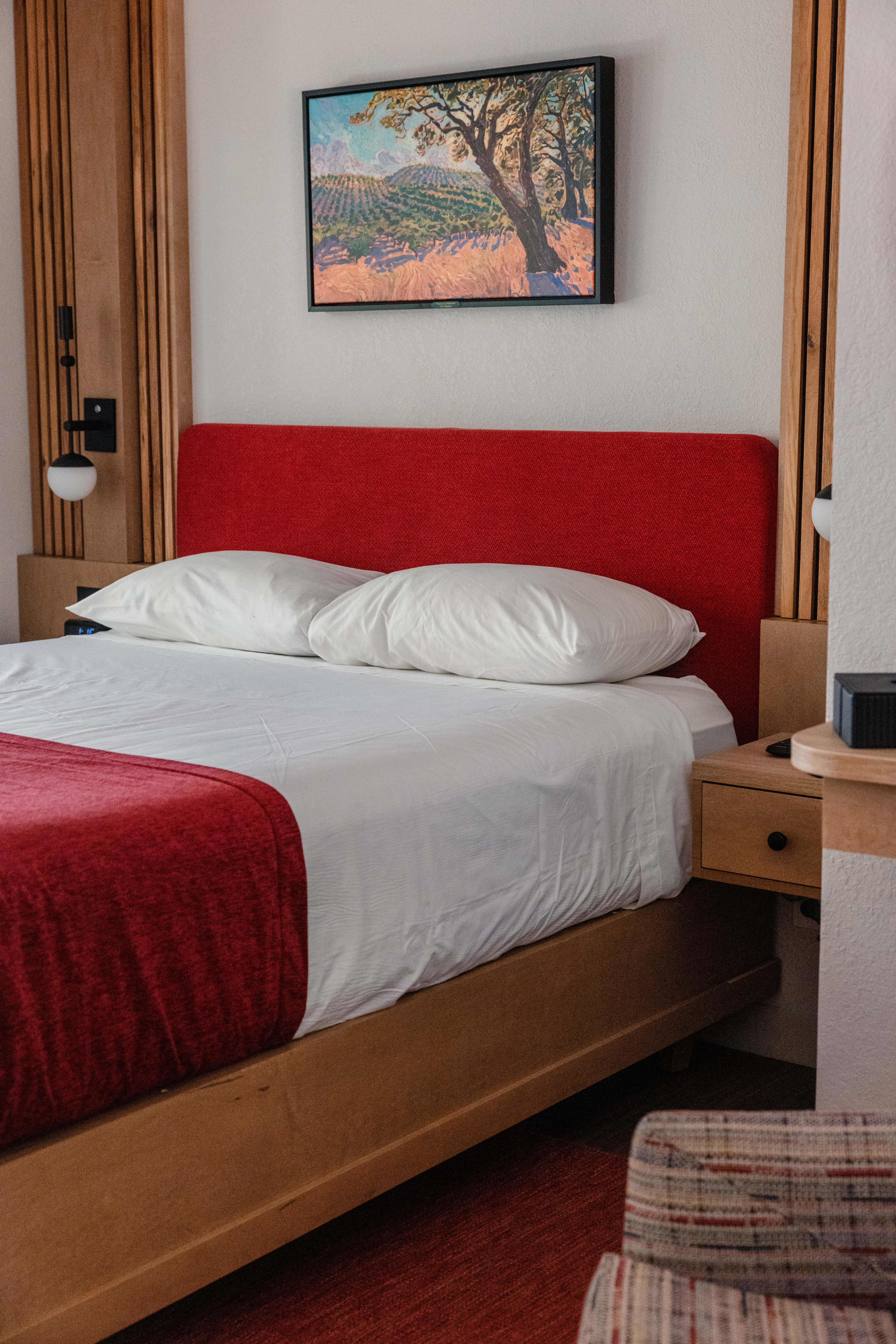
“We basically had to tear the rooms down to the studs,” Warren said. Old plumbing, framing and undocumented repairs made the work difficult. The flat roof, he said, remains one of the hardest parts to maintain.
He compared caring for the motel to owning an old vintage car.
“It’s going to be a pain,” Warren said. “It’s going to take a lot of work. It’s not going to be the most fuel-efficient. But if you take good care of it and you maintain it correctly, there’s nothing else like it.”
Inside the front rooms, the remodel felt modern, clean and bright, but still compact within the original motel footprint. Warren described it as intentionally fun with midcentury furniture, colorful touches, curves and playful bathroom tile.
The farther the group walked from the road, the more El Bonita changed eras.
Through the rounded corner of the L-shaped building, the later buildings appeared. A three-story back building and one-story rear row were added after Warren’s family bought the property in the 1990s. Those rooms are larger, quieter, and set farther from the highway.
Compared to the front rooms, they show a different phase of Napa Valley hospitality. They lean more into a vineyard-style design with painted headboards, carved wood furniture and other wine country touches. But the motel has started moving away from that brand.
“Everything here is just marketing wine, wine, wine,” Warren said. “Everyone knows this is a winery area. We don’t need to play into that anymore.”
Instead, El Bonita has leaned into its own character: the sign, roadside layout, and feeling part of a site that has always played a role in St. Helena’s history.
Warren noticed how guests take advantage of that experience. Some ask about the sign. Others take photos in front of it, arriving in hot rods and parking near the front for the full retro effect. Many choose El Bonita because it offers something more approachable in a town where lodging can quickly become expensive.
“People like El Bonita for the experience,” Warren said. “They like it for the history. They like that it’s part of the community.”
Inside the lobby, some of that history is kept on the walls.
Framed clippings, old images and postcard-style artwork show earlier versions of the motel. One painting depicts the motel colored yellow and white, before the pool, with the signature neon sign standing over an asphalt roadside.
A historic advertisement from 1952 describes El Bonita as St. Helena’s first modern motel. The car-facing rooms, highway location and pull-up convenience made the perfect modern features for early travelers.
Decades later, those same features are what make El Bonita now feel nostalgic.
From the motor court, the sign no longer reads as just the motel’s most visible feature. It becomes the thread running through each version of the property — from auto park and campground to midcentury motel and renovated rooms still welcoming travelers from Highway 29.
El Bonita’s history is not preserved in one untouched room or perfect artifact. It is preserved in the way the motel still belongs to the road.