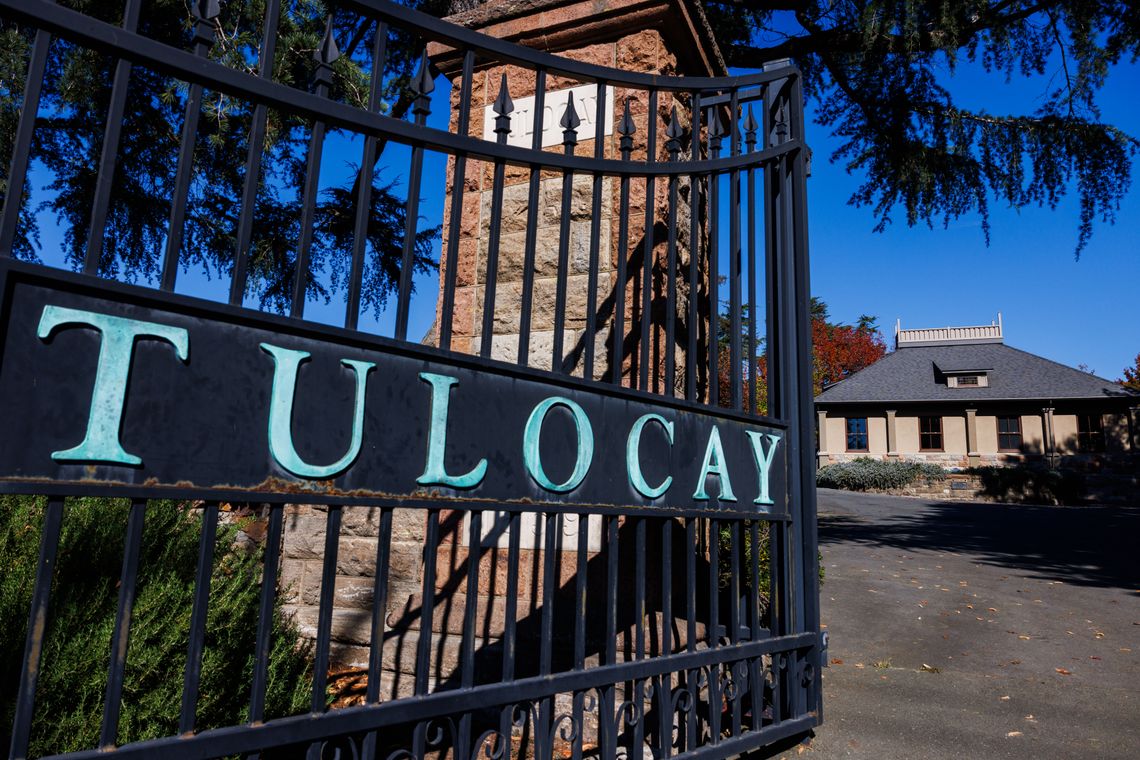
Napa’s 1906 stone Juarez Building — located inside the Tulocay Cemetery’s historic main gateway — has recently been rehabilitated to start its new life and purpose as the Tulocay Cemetery Association office.
While a team effort of the contractors, workers and cemetery staff was necessary to achieve this goal, the Juarez Building project was led by its visionaries — Tulocay Cemetery CEO Jeff Gerlomes and Karen Wesson, historic preservationist and hands-on project manager.
Both Gerlomes and Wesson succeeded in achieving their mutual goal of making it seem as if all the Juarez Building needed was to be refreshed with a new coat of paint. However, far more was needed and required months of work, from October 2024 to May 2025, to complete the project.
Although Gerlomes and Wesson collaborated well on this rehabilitation, the project began with a condition set forth by Wesson.
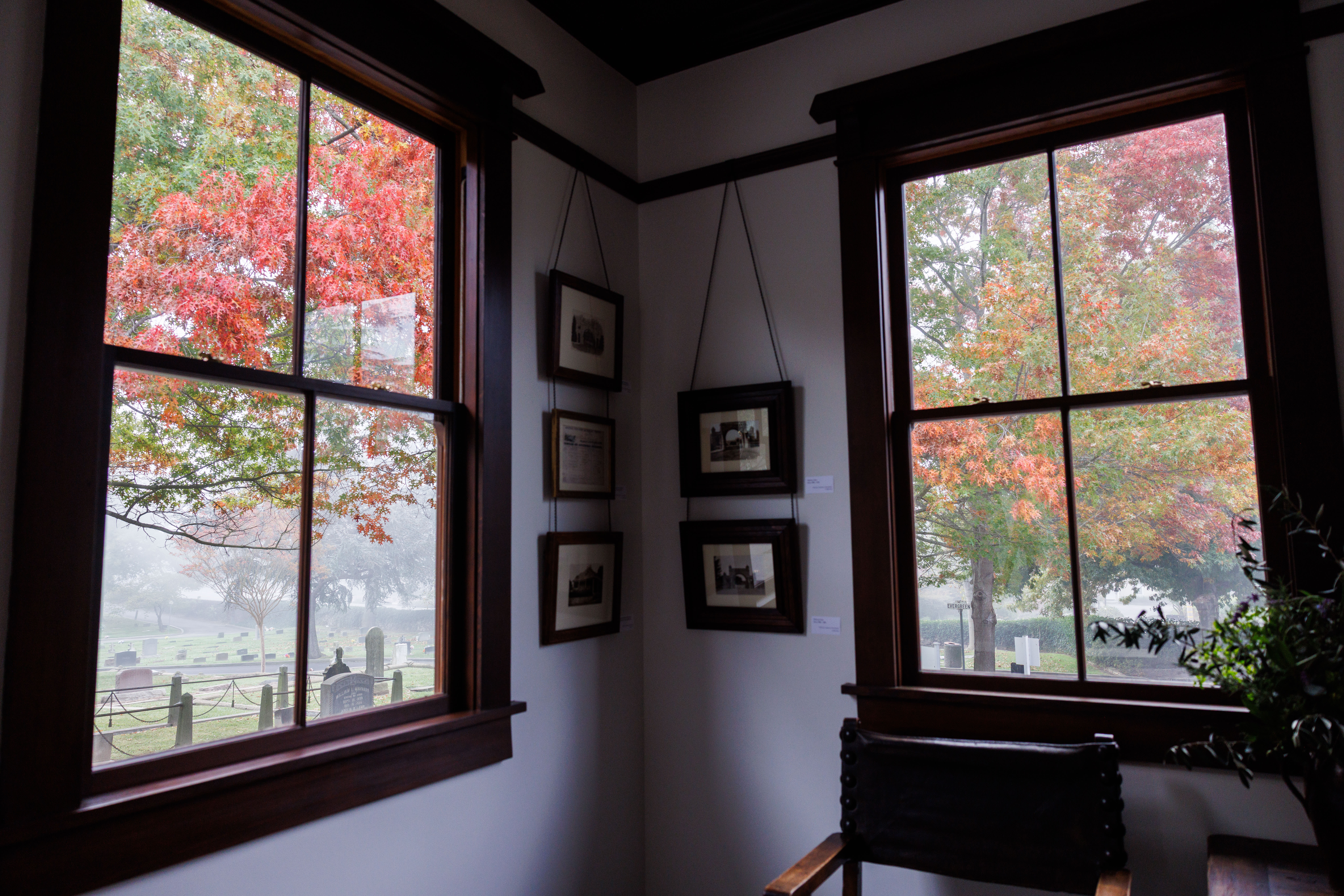
“When Jeff asked me whether or not I would be interested in being the project manager for the Juarez Building rehab, I replied I would be on one condition – the windows had to be restored to be or replaced with historically accurate” fenestration for the nearly 120-year-old building, Wesson recalled. With Gerlomes accepting her condition, Wesson began the project.
The rehabilitation of the Juarez Building required review and approval by the city of Napa Building Division. However, with no floor plans in existence for the building, Wesson had to hand-draw an entire set of plans.
Those drawings also included the historically accurate window specifications. Wesson explained how she designed those windows.
“I used a photo of the building predating the 1964 and 1989 remodels of the Juarez Building as a reference as to how many windows originally existed as well as their original design,” she said. “Then, knowing the measurements of the stones surrounding the windows, I counted the number of both the horizontal and vertical stones encircling each window to calculate the dimensions of the original windows.”
For the actual fabrication of new windows, a clear vertical-grain fir was specially milled by Channel Lumber of Richmond.
In addition to designing the windows with the historically correct dimensions and design, the mechanical parts of the double-hung windows are also authentic.
“Each window has antique pulleys and weights,” Wesson said.
Each window casement was stained, not painted, to prevent paint building up over time and ultimately adding to their longevity. As for the fabrication of those windows, Wesson said, “Cyprus Gonzales, owner and woodworker of White Owl Woodworks, made all of the windows. Channel Lumber Co. made the window and door casings except for the parts I made.”
Wesson added one more detail about the windows.
“On the south side of the Juarez Building, three windows were located between the original columns. I added one more to visually balance that exterior façade. There are now four windows on the outside of that wall but only three in the interior.” Wesson added, “It took a lot of planning.” She worked closely with the general contractor for the project, Stagner Construction, on this and all of the project.
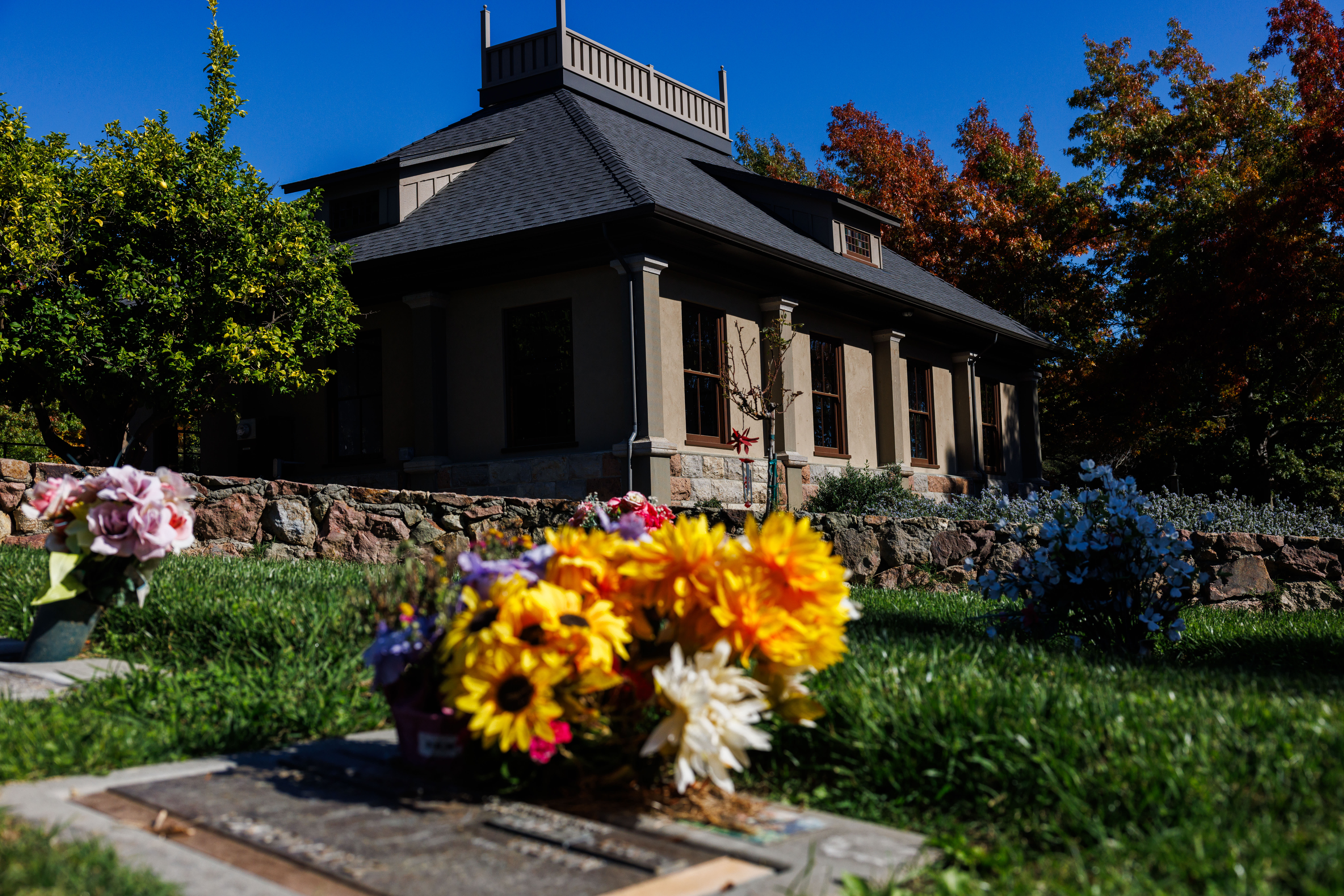
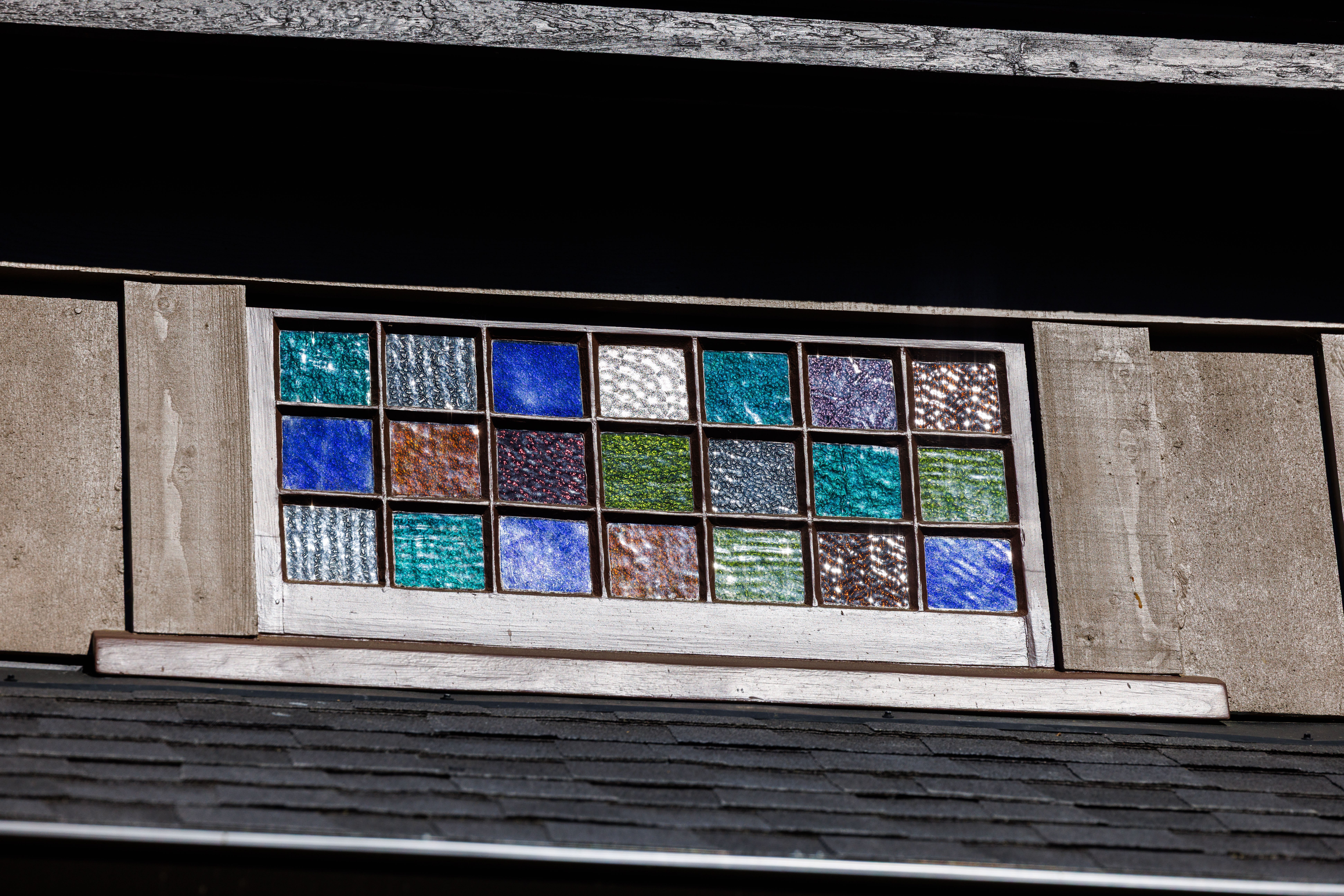
Other exterior work included a new roof to replace the timeworn and deteriorating one. ZFA Structural Engineering worked with Wesson to design a roof suitable for the building, and included in the roof rehabilitation were its dormer windows. The actual windows of these dormers were in poor condition.
“I took them home to my workshop where I stripped and restained them,” she said. “I also repaired some of the glazing, including replacing four damaged or missing colored-glazing pieces.”
An original detail of the roof was a widow’s walk. This architectural detail was restored to the Juarez Building during the rehabilitation. It was designed and manufactured by Allweld Metal Fabrication. Wesson also noted another original exterior detail, a large rooftop flagpole, was not restored to the building.
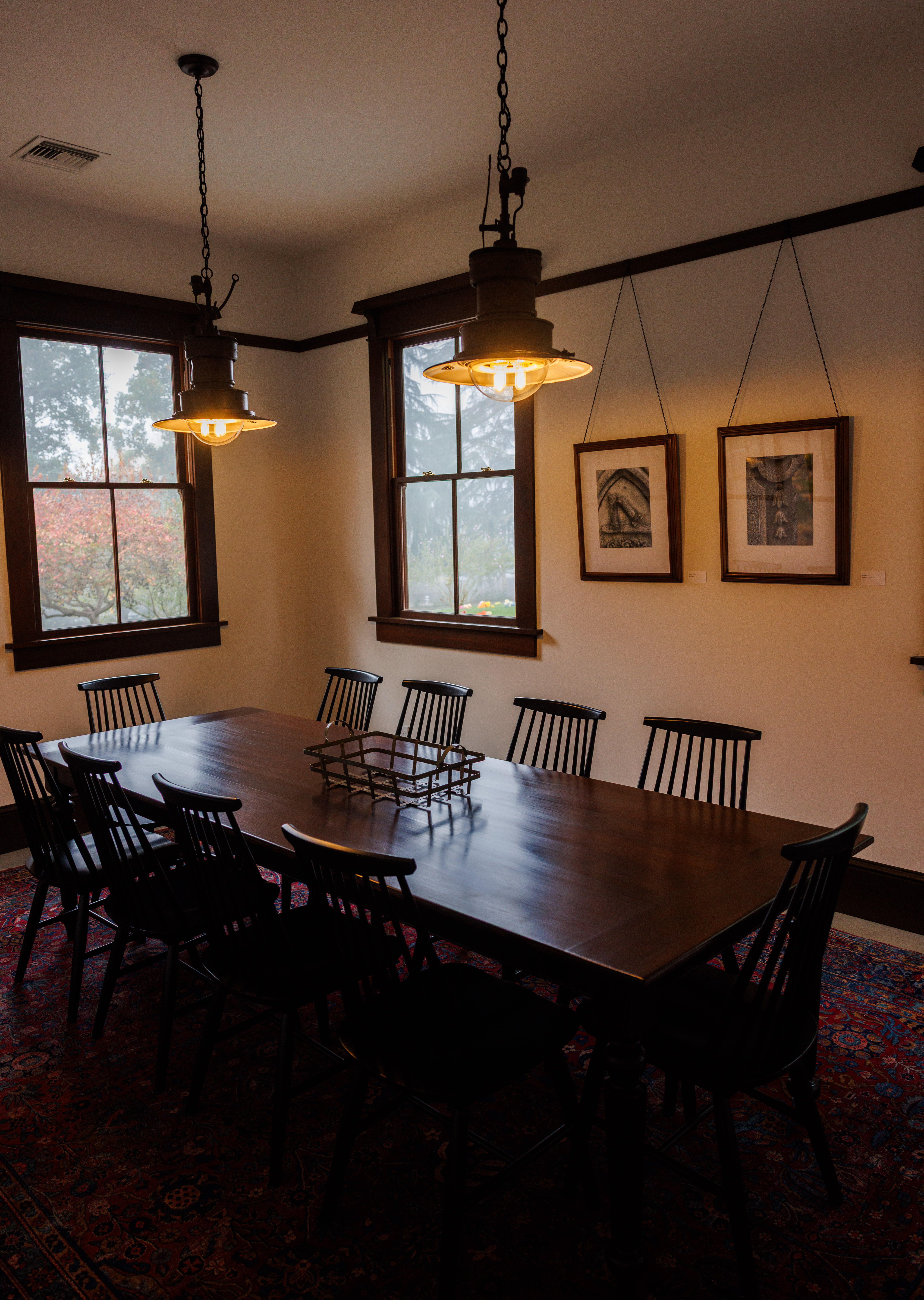
As for the interior, in addition to the windows, it received considerable attention from Wesson and her team without moving walls or changing its footprint.
The bathroom was upgraded to meet modern requirements for disabled access. Smaller but important changes included replacing the door hardware with period-appropriate hardware. Using the same wood as for the window casings, Wesson crafted corbels, lintels and base door plinths, staining them to match all the other interior woodwork. To add finishing touches, Wesson made doorstops and a dove. The latter conceals the plastic knob of the pull cord for the attic access door.
“I couldn’t have anything plastic in the building,” Wesson said with a smile.
While all of the wooden elements add to the overall feel of the interior, Wesson challenged her skill set with a substantial interior appointment.
“We had tried to find a 10-foot table for the boardroom but had no success,” she said. “I thought I could try to make it myself.” Using the same wood as the window casings, as well as a biscuit joiner, she crafted the tabletop.
“I purchased the table skirt and legs,” said Wesson. Once it was assembled, she finished the table with the same stain used throughout the interior.
“The conference table was a weird size,” said Gerlomes. “When she suggested that she would fabricate it, I thought, ‘What?’ She is incredibly clever and made the project so easy for me.”
Also as part of the interior work, some of the drywall from the 1964 and 1989 remodelings had to be replaced. Before the new drywall was installed, Wesson created a bit of a time capsule. She said, “I placed a set of plans into the space between the stone wall and drywall. It will be a surprise for the future.”
In honor of its past, the flooring was returned to concrete.
Wesson explained, “In Nancy Brennan’s history of Tulocay Cemetery manuscript, she quoted an article about the 1906 construction of the Juarez Building. Nancy stated, according to the article, the original flooring material was concrete, which we honored in its rehabilitation.”
The building was constructed by James Newman, a local stonemason. The building was referred to as the Lodge with its intended use being an office. The project invoice, of which a copy is displayed in the Juarez Building, listed the cost of constructing the 1,191.5-square-foot building as $1,279.75, plus an additional $235 for carpentry work.
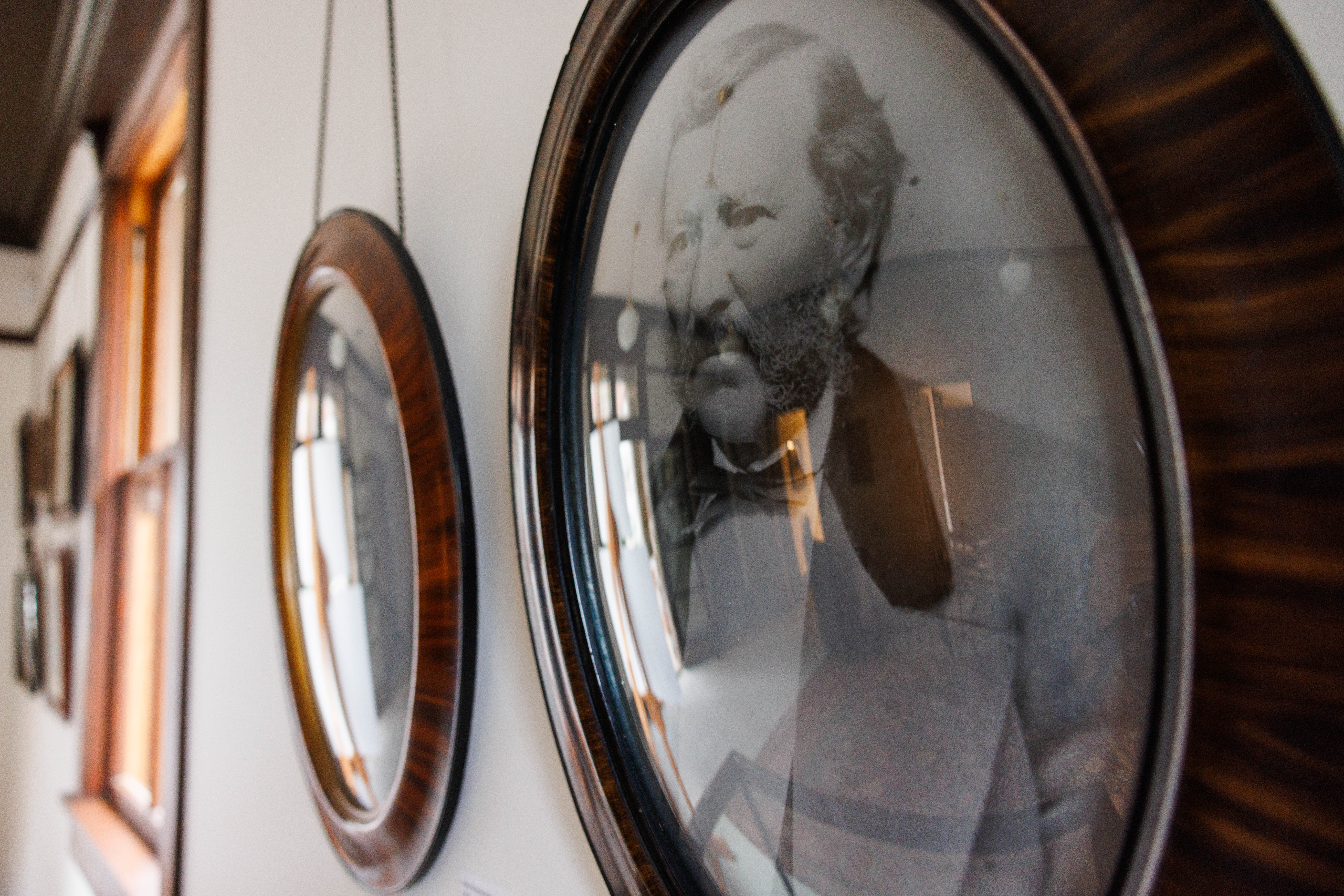
The interior spaces included in addition to the boardroom and bathroom are two offices, a galley-style kitchen and the museum room. All of those spaces are decorated with antique lighting fixtures as well as photographs relating to Tulocay Cemetery, from symbolic elements found through the cemetery to images of some family mausoleums.
The museum room, located just inside of the main entrance into the building, is the largest of the interior spaces. Within this space are artifacts related specifically to Tulocay, such as a map and historical photos of the cemetery.
Within the western wall of the museum room is a bronze plaque dedicated to Cayetano Juarez. Wesson said, “I haven’t been able to find the exact date of its dedication but it was sometime in the 1940s.” Cayetano played a major role in the establishment of the cemetery; in 1859, he donated 49 acres of his Rancho Tulucay land grant to the Tulocay Cemetery Association.
The museum room also features antique artifacts relating to the funeral and cemetery industry. Wesson found an online collector wanting to sell a bier, or casket, wagon. She said, “It was originally purchased in 1920 by a small English village. At some point, it became the property of a San Francisco cemetery before it was purchased by another collector.”
While the bulk of the rehabilitation is complete, there are some finishing touches that need to be completed, such as adding Wi-Fi.
“The office needs of today with all of our devices are quite different from 1906,” Gerlomes said.
“Our target date for officially opening the Juarez Building is January 2026,” he added. This project was made possible, in part, by a financial gift from the estate of the late Ronald and Dorothy Fagundes.
Regarding this project, Wesson stated it was a team effort of partners who all fully embraced the preservation of the Juarez Building, while also honoring its soul and its history.
“It is important to me to rekindle its spirit to give it a renewed purpose, a future,” she said.
“Karen was one of the best decisions I’ve ever made for Tulocay Cemetery,” said Gerlomes. “She is so passionate about history and preservation. It was amazing and incredible to work with her."