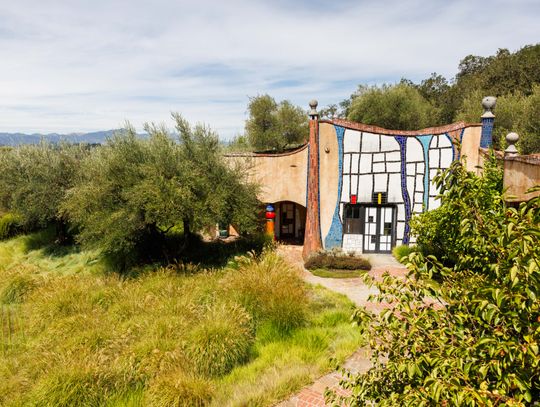
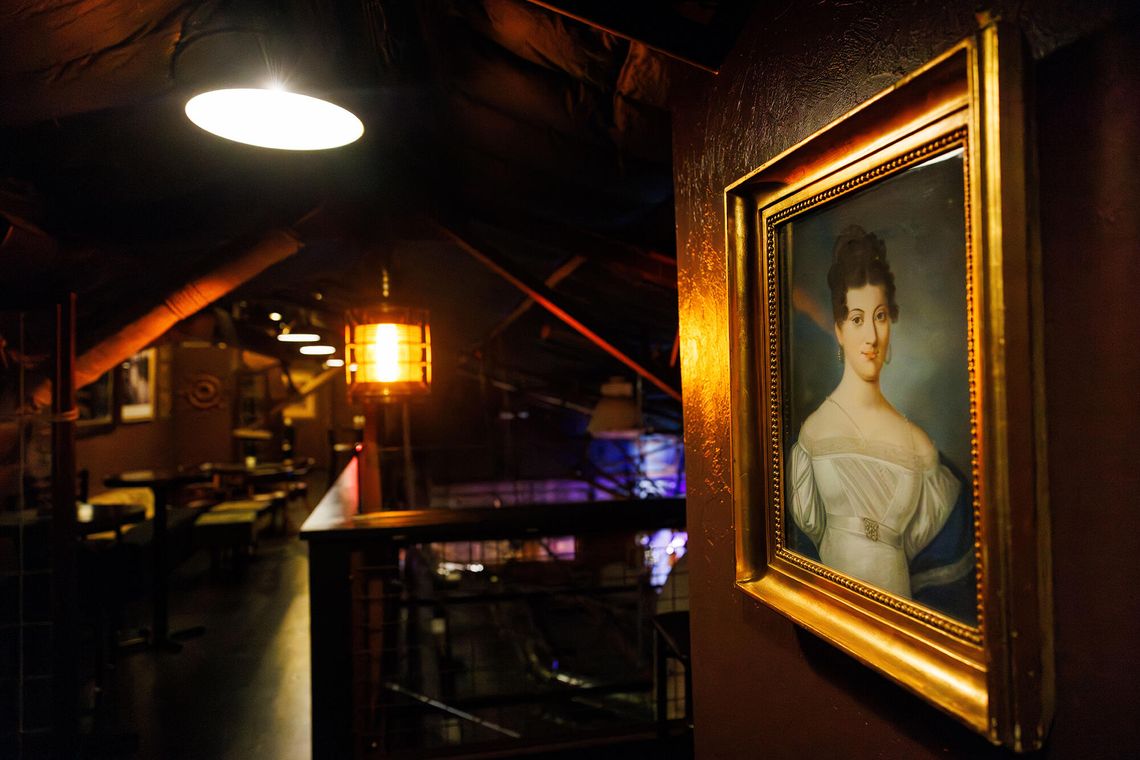
Stepping into The Fink in downtown Napa transports you to a 19th-century boathouse located inside the Historic Napa Mill along the Napa River.
When you first walk into the bar — known for its extensive, worldly cocktail menu — you are greeted by an intimately lit nautical theme. At first glance, the design feels directly ripped out of Napa circa the 1800s, when the old Napa Mill was first erected, In another instance, you could be transported to a boathouse — perhaps on North Peters Street in New Orleans’ French Quarter, or possibly at Pier 57 along the Hudson River in New York City.
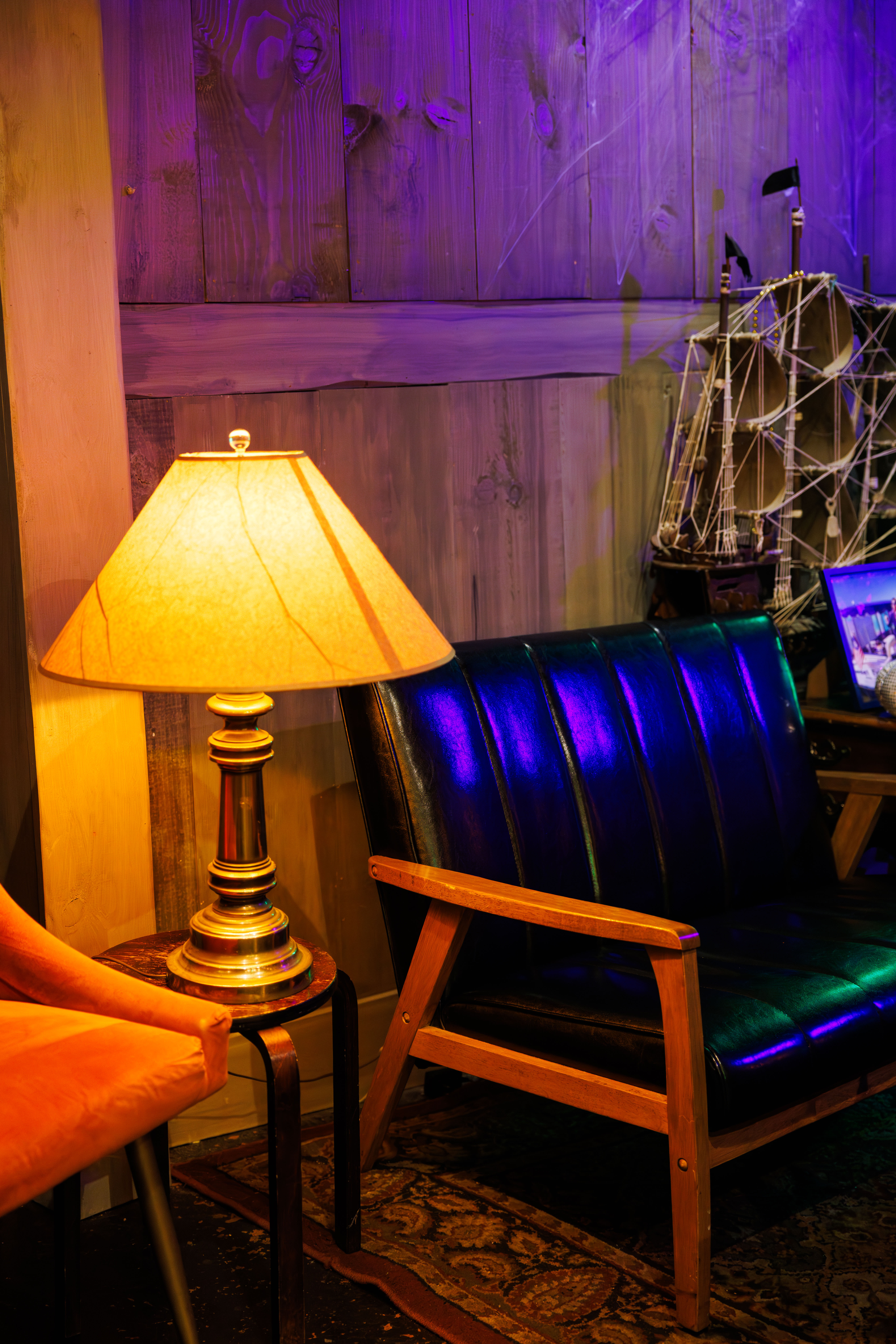
In one breath, The Fink can feel rooted and in another, like you have been plucked right out of Napa and placed somewhere exotic.
When the owner Judd Finkelstein — from whom the bar derives its name — purchased the bar at 530 Main St., he wanted to connect its atmosphere to Napa’s river history and industrial heritage. He called up his old friend Daniel Gallardo, also known as Tiki Diablo, who has designed bars featuring “exotic escapism” around the world.
“For me, it was all about finding authentic artifacts, artifacts that had meaning to the area, to Judd and to myself, and incorporating them or even designing around them,” Gallardo said. “The theme behind the bar was, this was the Fink’s lair, and it was like a time capsule. So we wanted it to look like it had been there for decades, and then somebody just had taken it over and used it.”
Finkelstein said he wanted it to be the neighborhood bar for the world traveler.
The bar sits in the historic Napa Mill building, which was first constructed in 1884, according to local historian Rebecca Yerger. The bricks were made on-site using materials from the Napa River. In 1887, an expansion added a two-story building and significant features such as iron shutters on the doors and windows, a corrugated iron roof, and walnut wainscoting on the second floor that was later replaced with pressed tin in 1901.
“The theme behind the bar was, this was the Fink’s lair, and it was like a time capsule. So we wanted it to look like it had been there for decades, and then somebody just had taken it over and used it.”
— Judd Finkelstein, Fink owner
In the late 1990s and early 2000s, a modern restoration added the Embarcadero Building on Brown Street. A restoration of the Hatt Building maintained key features such as original redwood wainscoting, exposed reinforced brick walls, and the original rounded windows with iron fire shutters. The outdoor plaza incorporated salvaged materials such as original bricks from the demolished warehouse and cobblestone from the surrounding streets, according to Yerger.
When approaching the design of The Fink, Finkelstein and Gallardo took a similar approach.
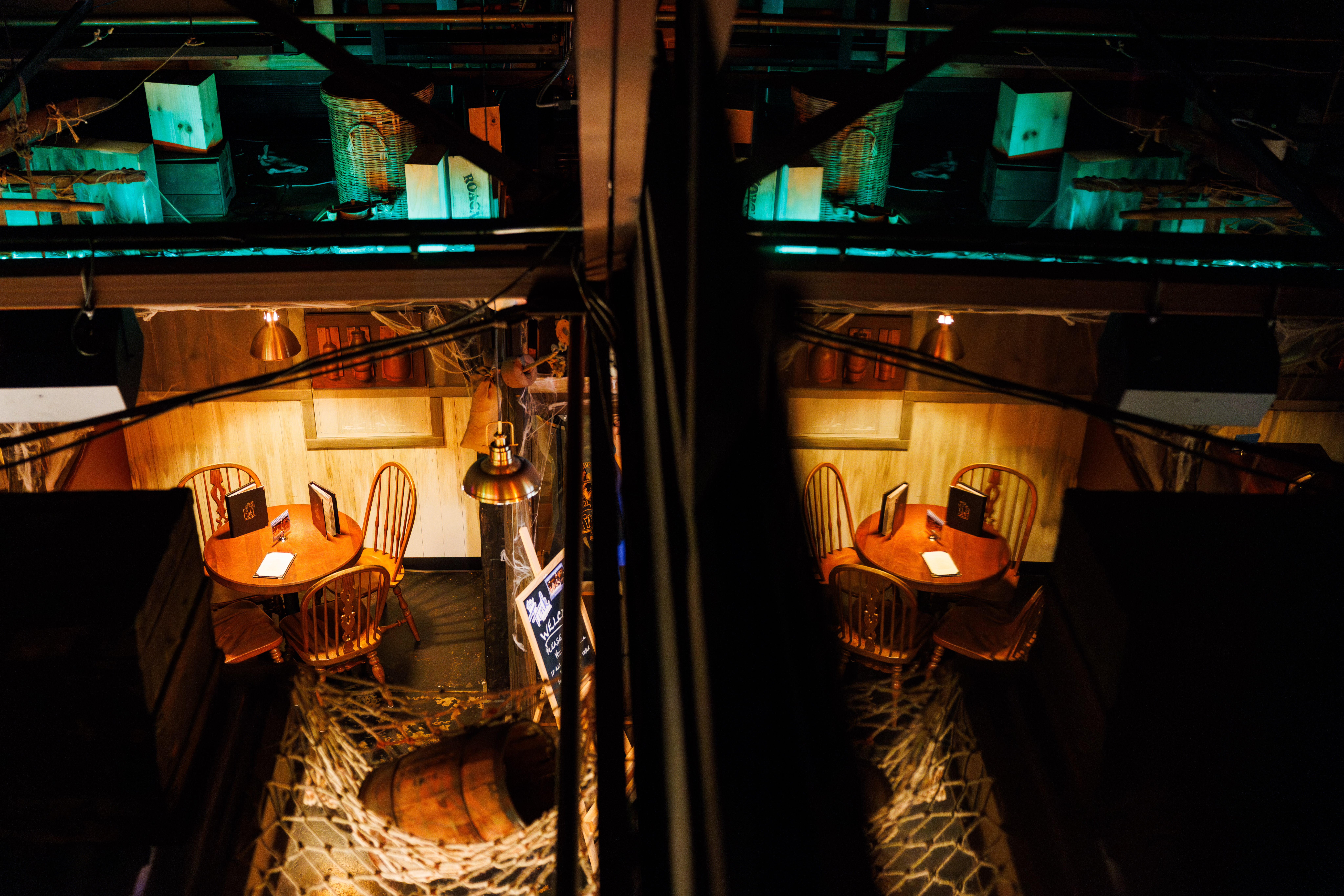
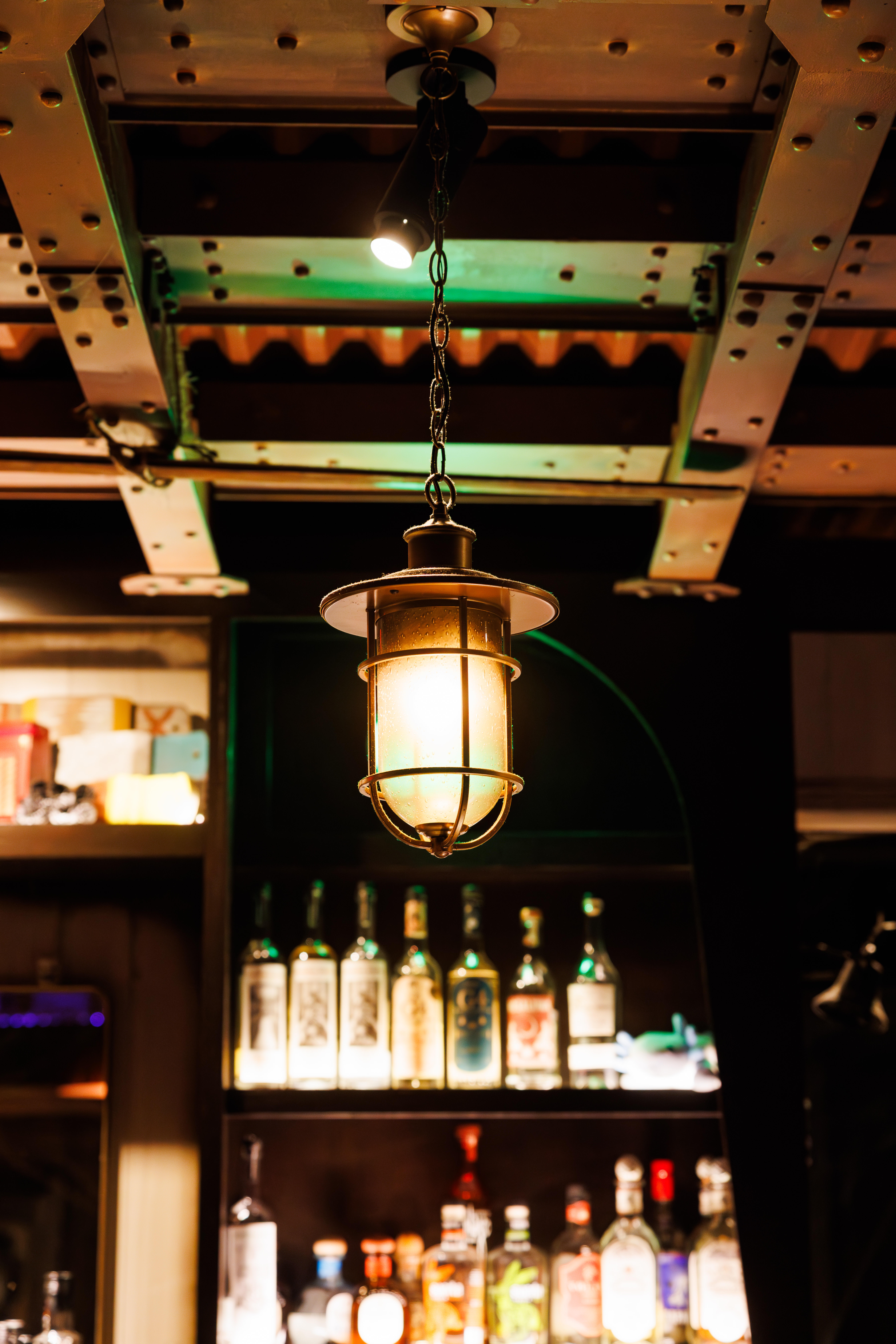
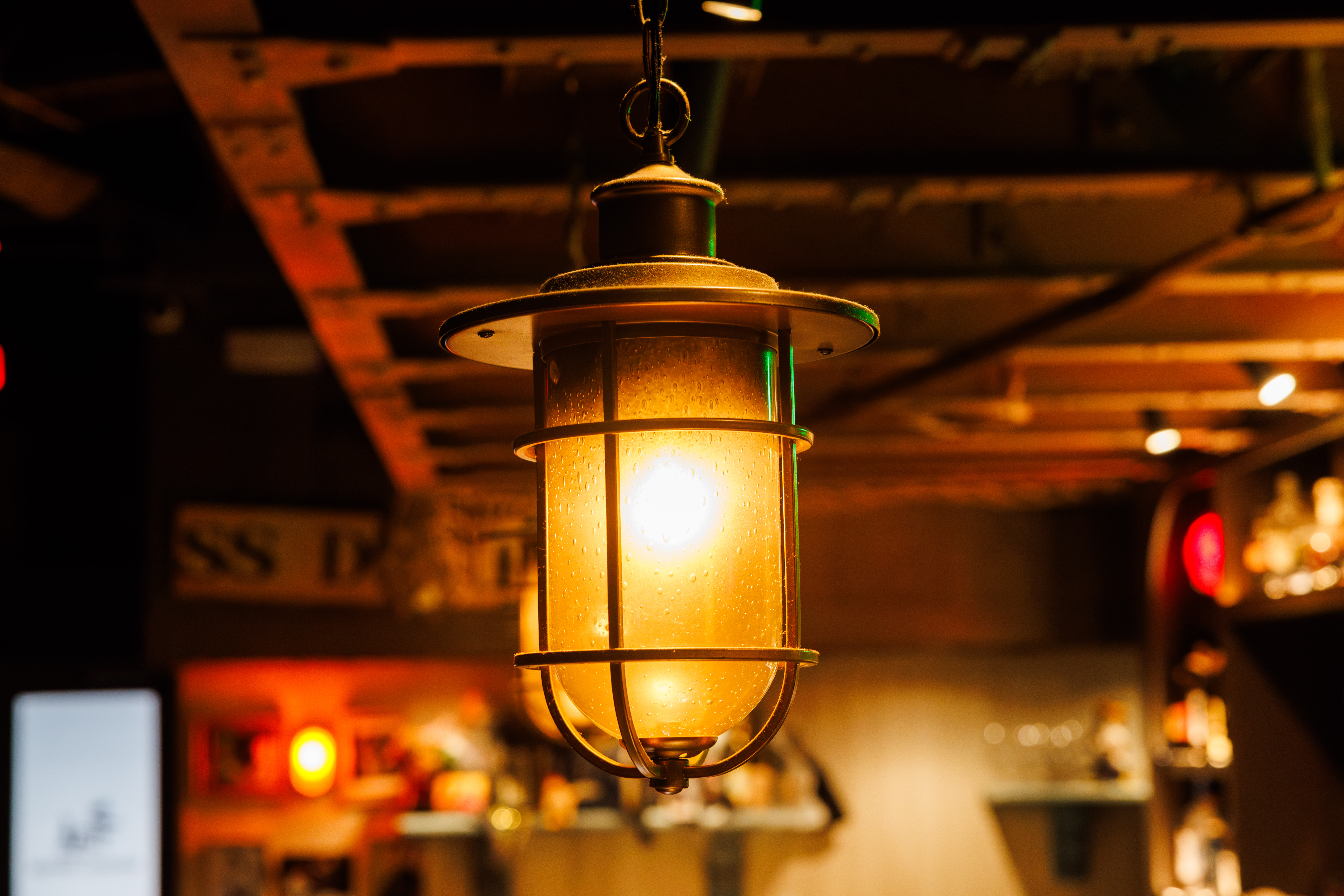
Authentically sourced brass portholes, which weigh about 60 pounds each, sit on the walls directly above each of the comfortable cushioned leather booths. The smooth wooden tables reflect the warm glow of the copper light fixtures that hang above them. Fishing nets, ropes and hooks that adorn the ceiling and partitions between the booths would inspire anyone to take up sailing or perhaps just dive headfirst into another of The Fink’s fine-crafted cocktails.
The curved L-shaped bar with its dark wood finish is understated to make way for what bartenders are serving up. Behind the bar are two mirrors that help to open the intimate space, which has no windows to the outside world and certainly no televisions that could intrude on the illusion of delving deeply into this time capsule.
“There’s no connection to the outside, and you’re immersed in it,” Finkelstein explained.
On either side of the bars sit rows of shelves carrying the carefully selected assortment of liquors and liqueurs used to make each one of The Fink’s skillfully crafted beverages. Near those shelves sit two authentic ship lights on either side — one illuminating green for starboard and the other red for port.
Above the mirrors sits one long shelf that holds a 1950s radio, old Soda Springs water bottles and a selection of what appear to be vintage glass bottles, each with colorful yet unknown contents. Finkelstein said they were given to him by a childhood friend from St. Helena where he grew up. Her father was a chemist and in his spare time he liked to distill his own concoctions.
Hanging in the rafters are several small boats. Two of them, which sit almost right above the bar, are small sculling boats that were found by Gallardo in a sea scouts’ warehouse. The other, which is near the back of the bar, is a vintage 1960s fishing boat that was originally sold in an old Sears catalog. Finkelstein purchased it from someone in Sebastopol.
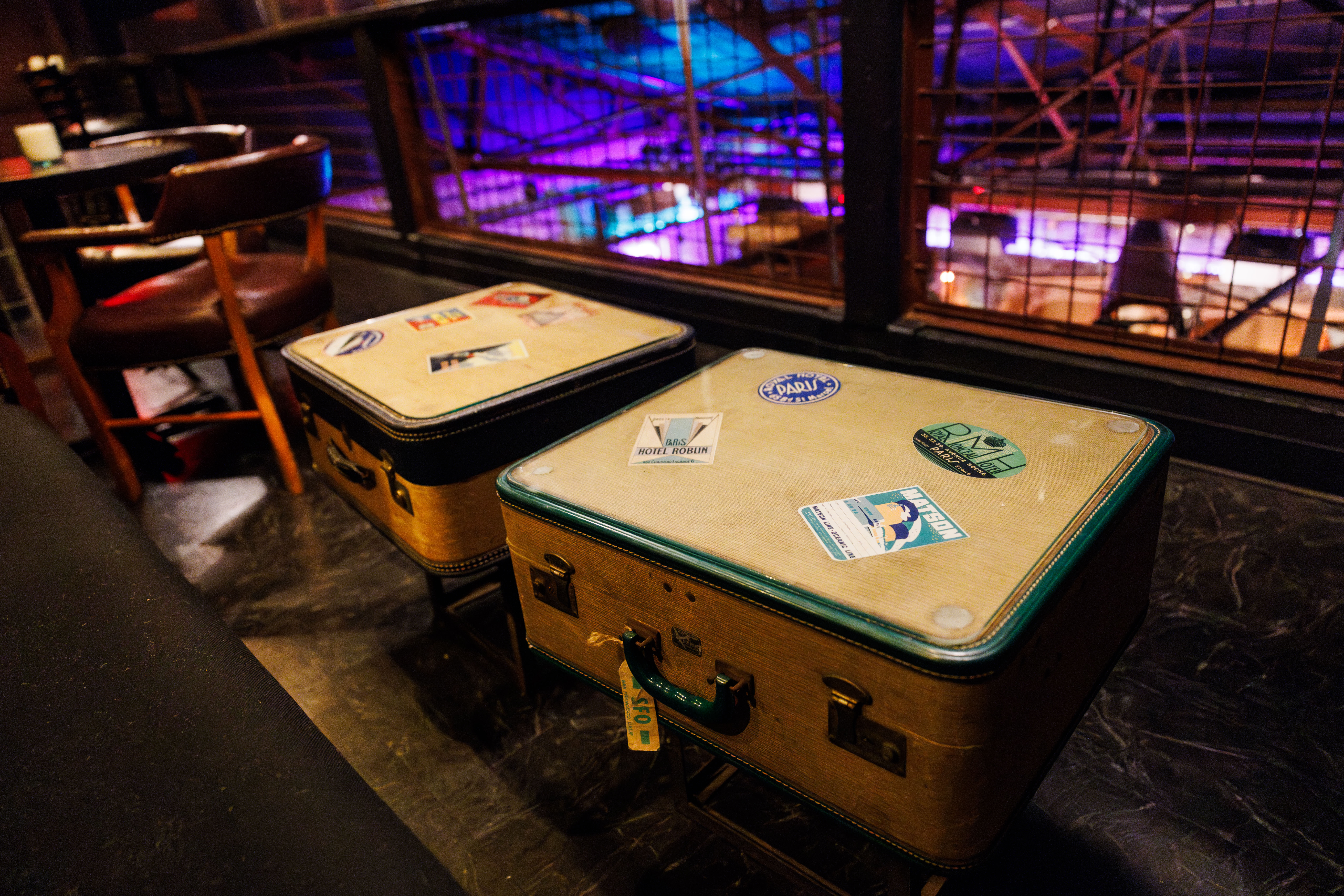
Between the bar and the booths sit four small tabletops. Walk past those tables and the L-shaped room opens to the lounge seating area. Strewn around low wooden tables are mismatched mid-century modern chairs and love seats.
To the right is the performance space, where a piano sits. The world-renowned jazz musician Mike Greensill gifted it to Silo’s, which was the bar in this space before The Fink took over. Greensill was a regular at Silo’s and still comes to The Fink once a month to perform.
Behind the performance space on the wall is a watertight door, like one would find on a large ship, and it is illuminated by a foreboding orange glow. Finkelstein has had to insist to more than one customer that the door leads to nowhere and is simply just hung up on the wall.
“People have come up with some crazy story about the hidden room, but I don’t want that rumor out there,” Finkelstein said. “I’m not somebody who likes to be exclusive. I’m inclusive. There’s no secret party going on.”
Another feature that adds to the authentic feeling of this nautical bar are the signs on the wall that read “SS. Dolphin, SS. Amelia and SS. Zinfandel.” All were boats that used to ride along the Napa River transporting goods from all around the world, Finkelstein said.
All of these aspects that bring life and color to The Fink are set against an industrial gray backdrop. What appear to be exposed rivets and steel beams are actually deliberately placed. Gallardo even painted some of the wood features to look like steel. He made it look so real, in fact, that Finkelstein said he had to convince their contractor that it wasn’t actually a giant steel fixture hanging above everyone’s heads.
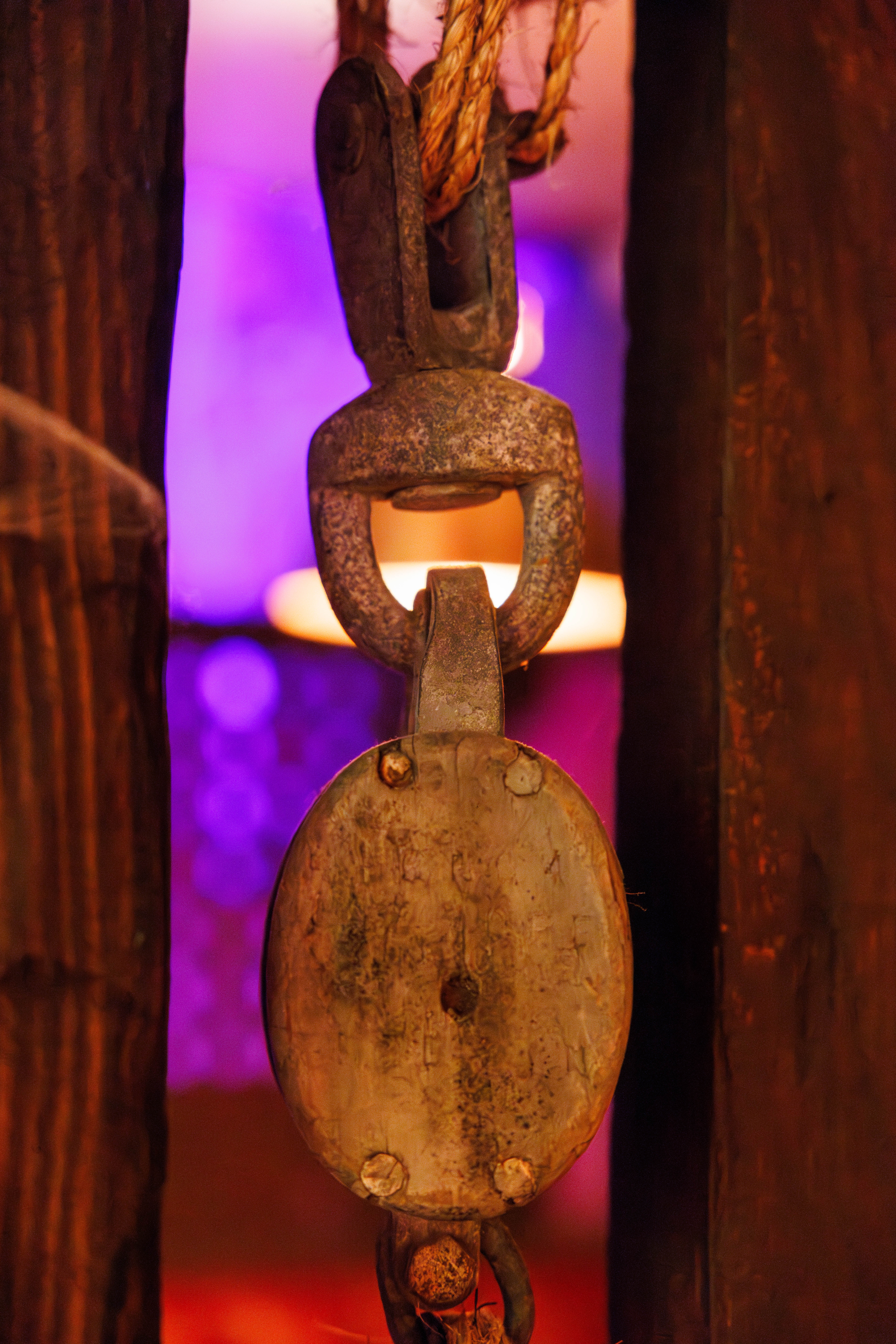
Finkelstein said he hopes the décor is organically ever-evolving and that the community continues to contribute to the design, helping it remain authentic to its roots.
“It definitely touches my heart,” Finkelstein said. “It sounds corny, but it really does when on just about any night of the week, when I look around, and we’re mostly filled with locals.”
The Fink is open from 4 to 11 p.m. Tuesday through Thursday and on Sundays. It is open 4 p.m. to midnight Friday and Saturday. The space is also available to rent for private parties.
For more information, visit thefinknapa.com.